The Dakar Greenbelt and the Great Green Wall Initiative
The Great Green Wall Initiative aims to restore degraded drylands and create green jobs across 11 countries in the African Sahel. The Dakar Greenbelt brings this vision to an urban context, addressing ecosystem loss, climate risk, and economic opportunity in Senegal’s capital.
The Great Green Wall Initiative
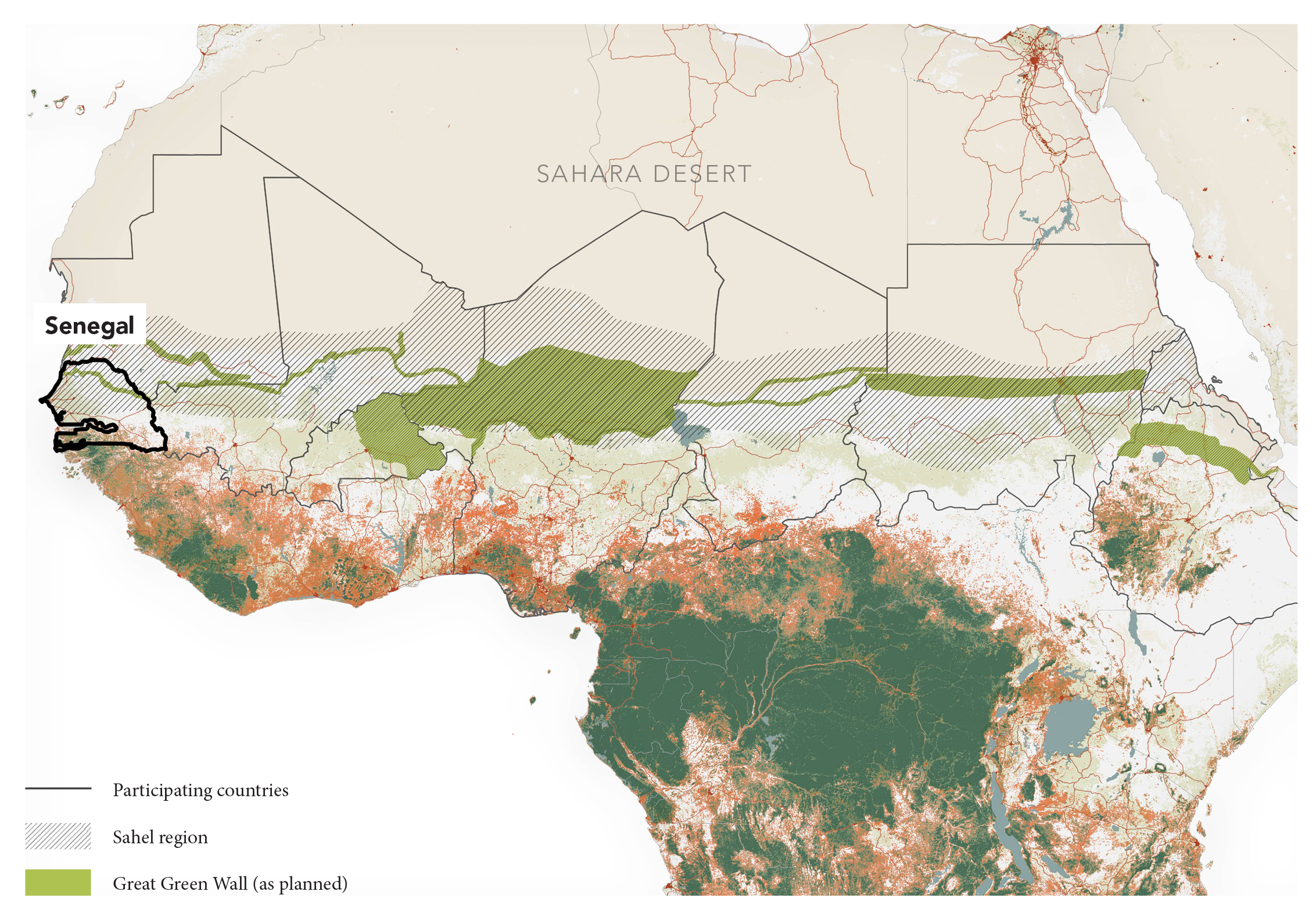
The Great Green Wall of the Sahara and the Sahel Initiative (GGWSSI), launched in 2007 by the African Union, is a visionary effort to restore 100 million hectares of degraded drylands, improve livelihoods, and increase food security across the African Sahel.2 By 2030, the GGWSSI intends to sequester 250 million tons of carbon and create 10 million green jobs. The effort involves 11 countries, including Burkina Faso, Chad, Djibouti, Eritrea, Ethiopia, Mali, Mauritania, Niger, Nigeria, Senegal, and Sudan. In 2015, the South African Development Community joined the cause, expanding the effort across the continent. Today, over 35 member countries of the African Union are participating in the Great Green Wall Initiative.
In Senegal, interventions related to the GGWSSI have been underway since 2008, primarily focusing on ecological restoration, development of agroforestry initiatives, and the expansion of non-timber forest product value chains in three administrative regions: Tambacounda, Matam, and Louga. These interventions include reforestation, creating wind and fire breaks, promoting natural forest regeneration, and implementing job training programs. In total, 850,000 hectares of land have been restored, impacting an estimated 322,000 residents in Senegal.3 In 2022, the Senegalese Great Green Wall expanded its footprint and vision to include water management, food transformation, improved livestock practices, milk processing centers, increased access to irrigation, improved stoves, ecotourism, and renewable energy development.
Bringing the Initiative to Dakar
Cities like Dakar, where environmental pressures from rapid urbanization are intensifying, are key players in the realization of the GGWI.
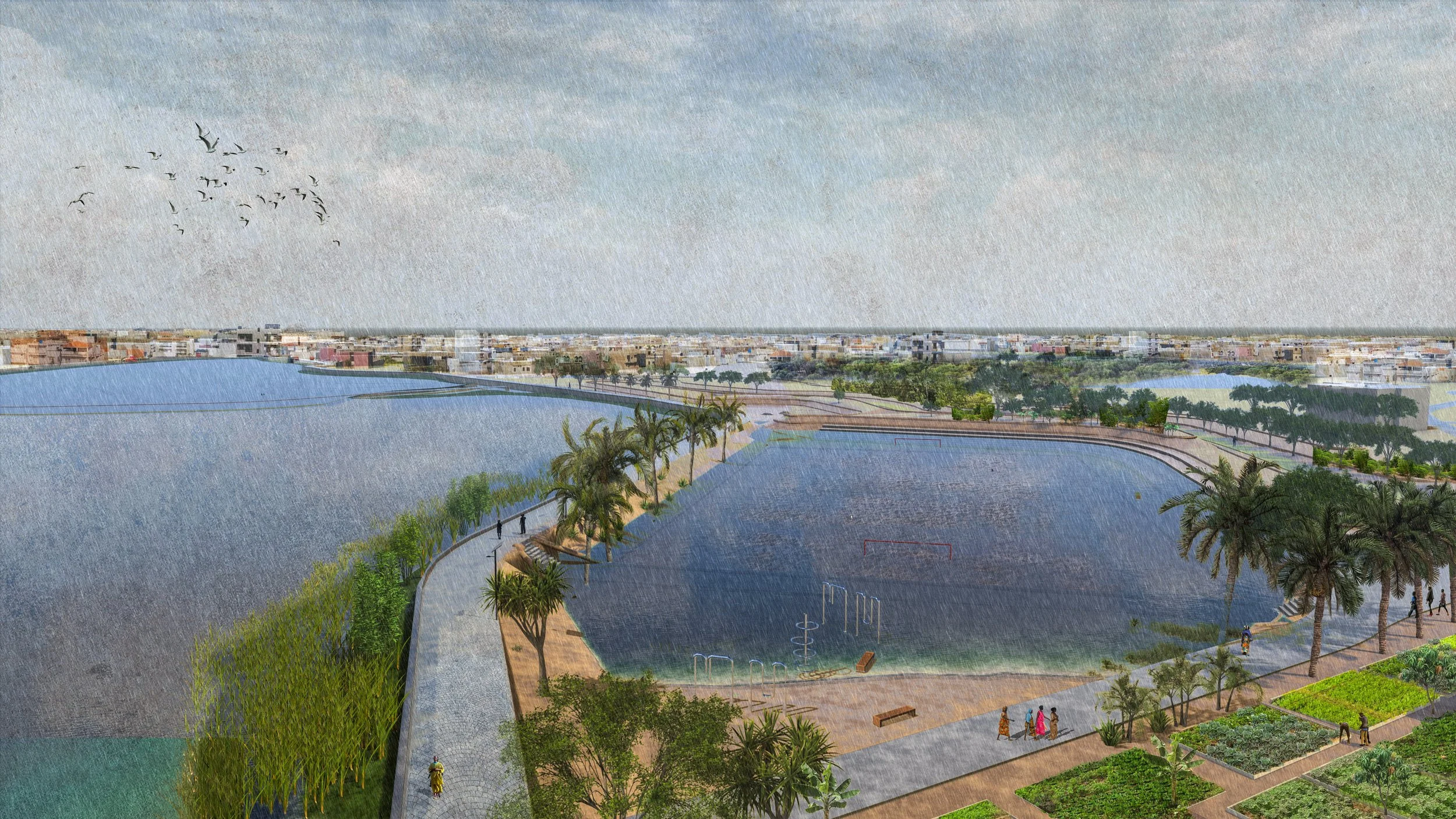
The Dakar Greenbelt is an opportunity to bring the wall to its symbolic starting point on the western coast of Africa and adapt its core principles to an urban context. The Dakar Greenbelt proposes to restore fragmented urban ecosystems through a set of context specific sustainable land management strategies that directly support the GGWI’s goals of ecological restoration, climate resilience, and green job creation.
By investing in the Dakar Greenbelt, the GGWI can demonstrate how its successes in rural environments can translate to cities, offering a model for scalable green infrastructure across Africa’s growing urban landscapes.

The Greenbelt Approach
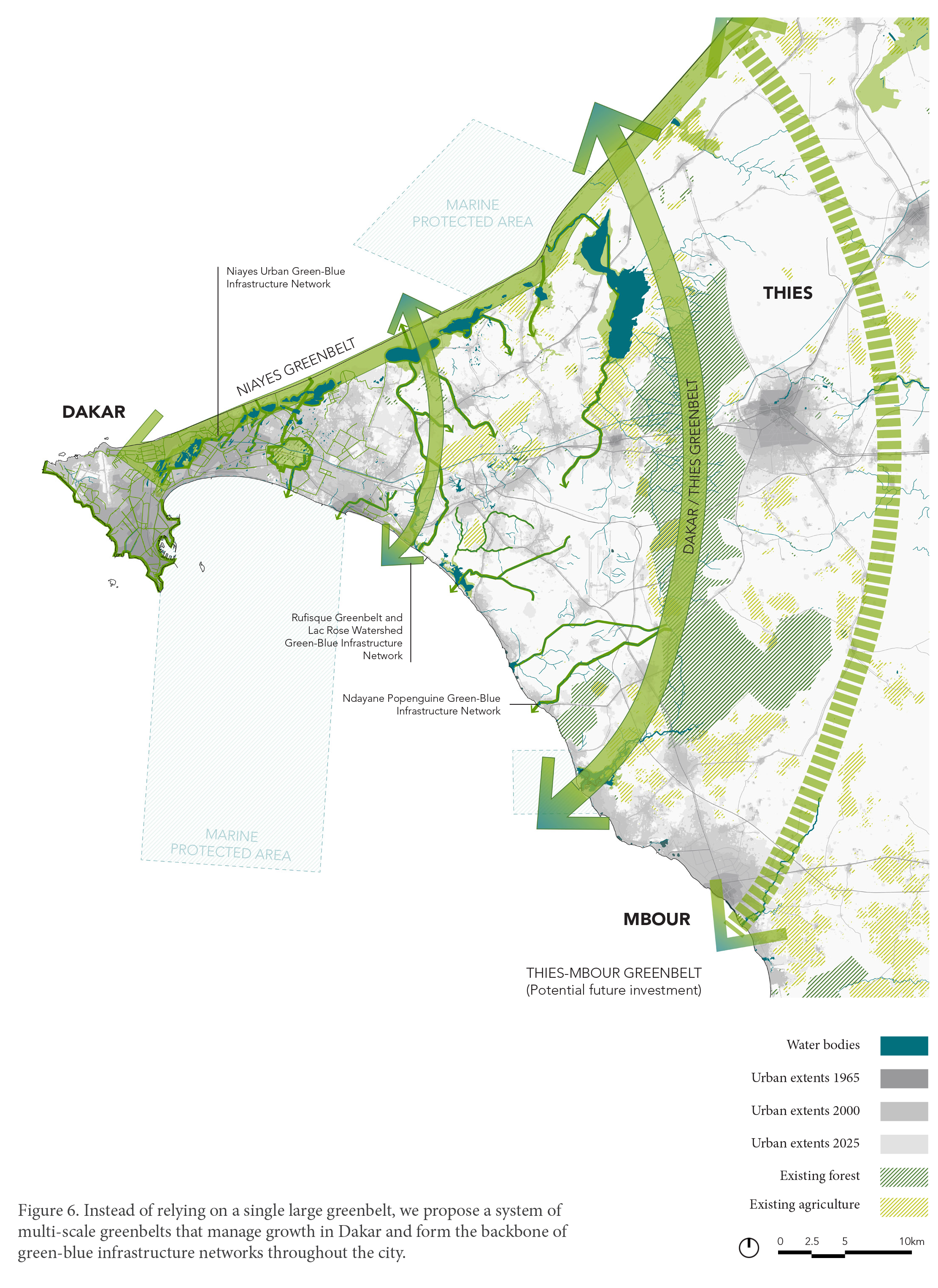
An urban greenbelt in Dakar offers a powerful, unifying framework to structure the rapid expansion of the city while preserving its natural resources. Our approach is twofold, using both linear network (greenbelt) and pointed (green infrastructure) strategies that operate at regional and local scales.
Greenbelt
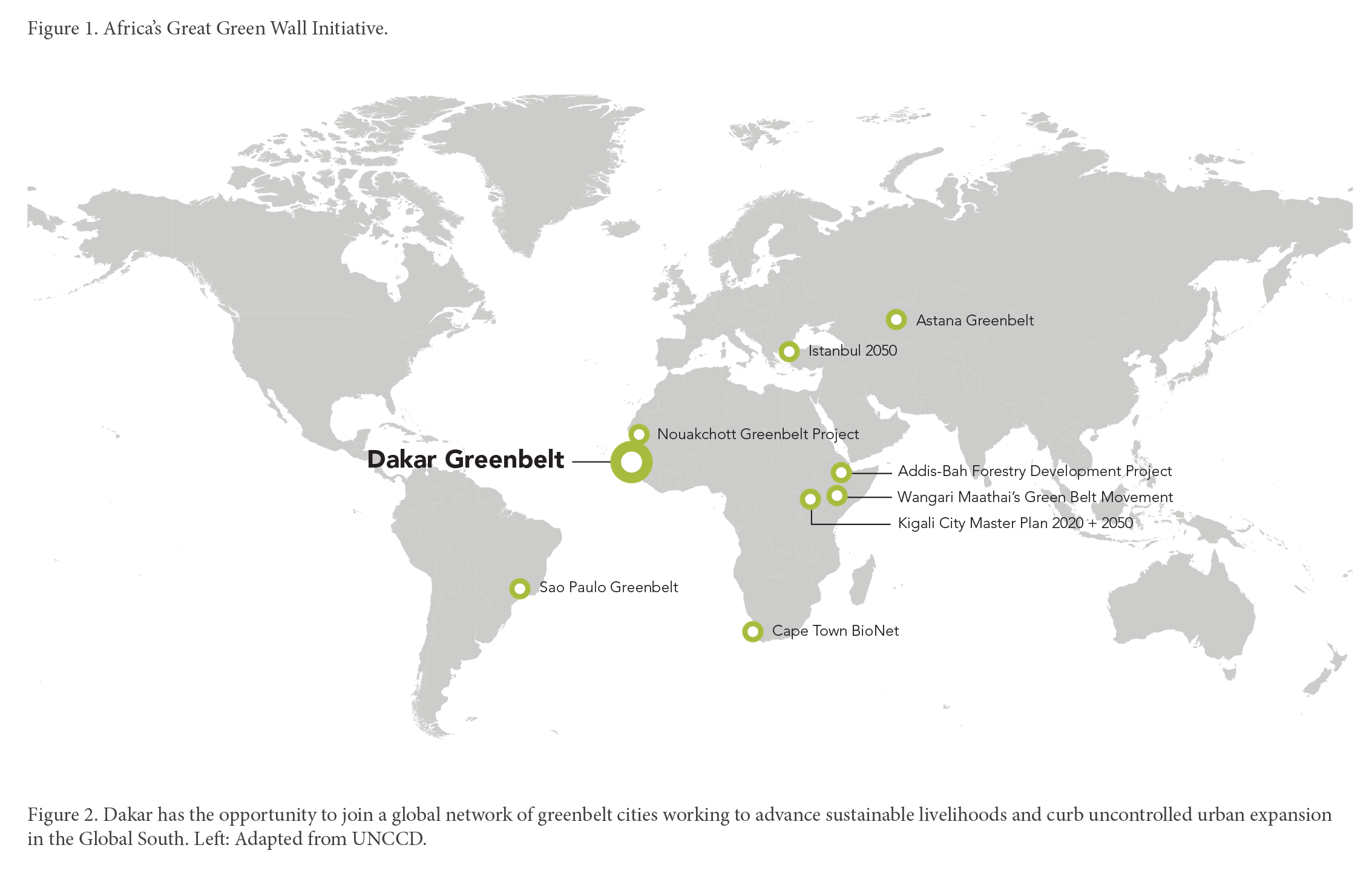
A greenbelt is a land-use designation that retains areas of undeveloped, wild, or agricultural land surrounding an urban area, preventing uncontrolled sprawl and preserving valuable ecological assets. The term “greenbelt” emerged from continental Europe, where greenbelts were used to prevent urban sprawl beginning in the end of the 19th century.11 Now, greenbelts can be found worldwide, notable examples from the Global South including São Paulo Greenbelt and Biosphere Reserve, The Nouakchott Greenbelt Project, Addis Bah Forestry Development Project, Mangari Maathai’s Greenbelt Movement, Kigali City Master Plan, and the Cape Town BioNet & Local Biodiversity Strategy and Action Plan.
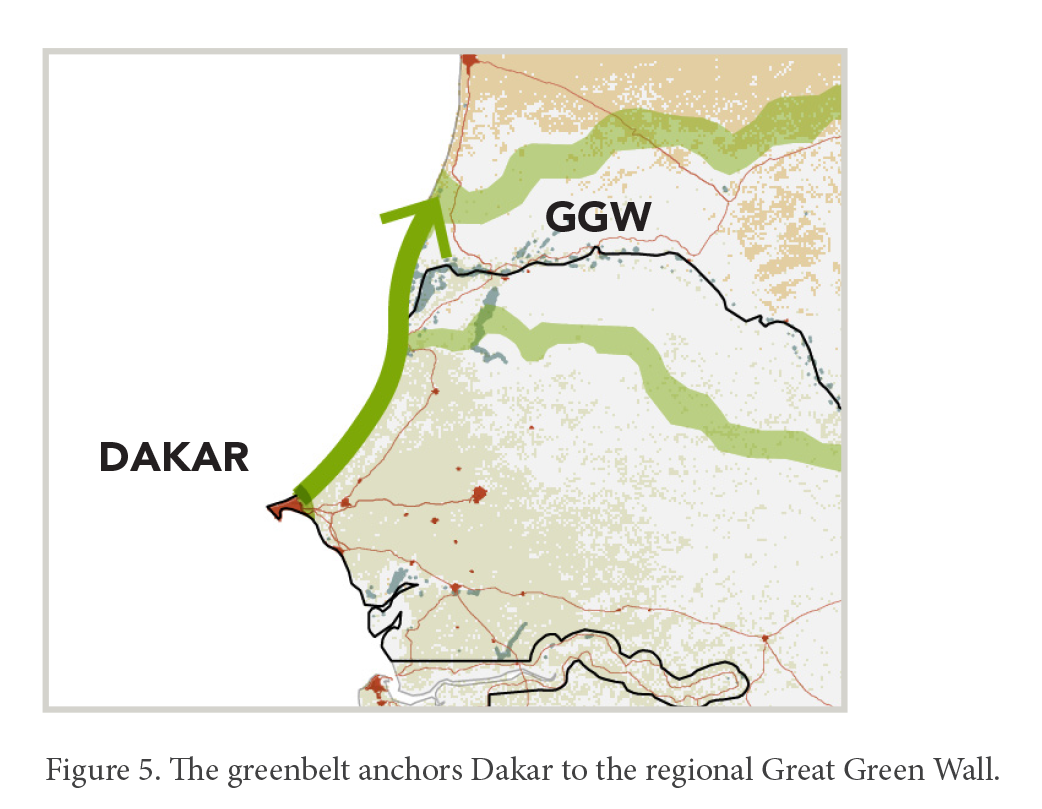
In Dakar, a greenbelt could take shape as a continuous, large-scale band of protected areas that shape urban form, connecting ecosystems from the Grand Côte to the Petit Côte, protecting critical watersheds, and preventing the complete conurbation of Dakar, Thies, and Mbour. Additionally, extension of the Greenbelt north along the Grand Côte would link the city to the regional Great Green Wall.
Green-Blue Infrastructure
Green infrastructure, broadly, refers to strategies that harness natural processes for stormwater management, improved air and water quality, food security, and climate resilience. These targeted, site-specific interventions aim to address local needs and environmental challenges while reinforcing the larger greenbelt network.
-

Reforestation
Including urban agroforestry, street trees, community tree nurseries
-

Re-Grading & Earth Work
Terracing, swales, water retention strategies
-

Sustainable Agriculture
Including micro-gardening, agroforestry, inter-cropping
-
Sustainable Building Materials
Locally sourced and recycled materials
-
Coastal Resiliency
Mangrove restoration, nature-based shoreline resiliency measures, sustainable fishery
-

Cultural Conservation
Including women’s gardens, sacred groves, mosque landscapes